Monday, September 11, 2006

White-throated Sparrows (Zonotrichia albicollis)

We presently have three different Sparrow species visiting our feeders daily: Song Sparrows, Chipping Sparrows and White-throated Sparrows. The most visually outstanding of these three are the White-throateds. The white and black striped head and the yellow lores of the adult immediately give recognition. And even when you do not see them their call is very distinctive so that when you hear their refrain, "O Canada, Canada, Canada", you know a White-throated Sparrow is nearby. This season we have had many adult and juvevile White-throated Sparrows in our feeder area in late summer, perhaps more than other years. This juvenile pictured here already shows the beginnings of its distinctive head patterning.

Sunday, September 10, 2006

Butterflies in the Meadow

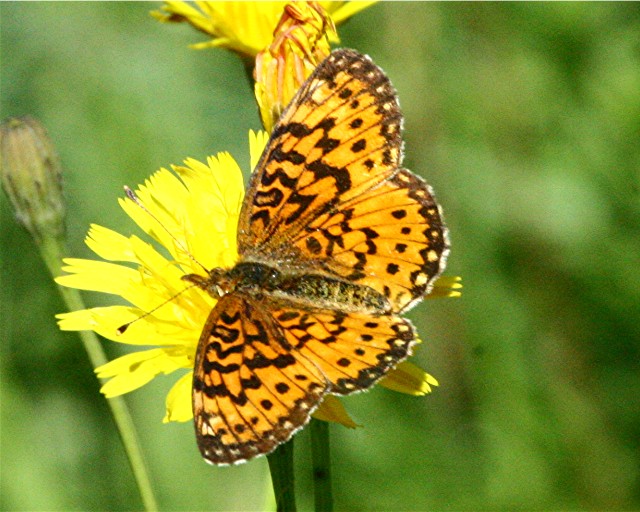
I haunt a nearby meadow daily, (left Common Ringlet) during June and July searching for butterflies, but after the grass has been mown there, (right Clouded Sulphur) I wander off searching other areas and only check that area infrequently after that. Yesterday, after having seen two large birds fly over the river, I decided to check out the area. No large birds were to be seen but I found myself wandering in a corner of the meadow in which I seldom go. (left Northern Crescent) Much to my surprise I found four different butterfly species there! I shall continue to check out this area (right Meadow Fritillary) in the next few days to see if I can find other butterflies there.

additional posting at 1:41 pm, see below:
I returned to the meadow this morning and found an additional species; a Silver-bordered Fritillary

Saturday, September 09, 2006

Rock Doves(Columba livia) in Flight

I never really intended to do a posting on Rock Doves (aka: Pigeons), for somehow those birds often failed to attract my attention and I usually took very little notice of them. However, yesterday, I did see a grouping of them in the middle of the river on some rocks, and with nothing else in view, except one lone Cormorant, I decided to take some pictures of them. With the 'click click' of my camera shutter they took off and so most of the images captured were of the birds in flight.

I was very amazed at the beauty of their wings when I downloaded the photos and I was immediately reminded of old images I had seen of 'angel wings' when I viewed their very graceful curves.

Friday, September 08, 2006

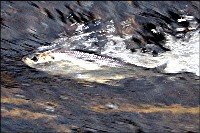
Fish in the River


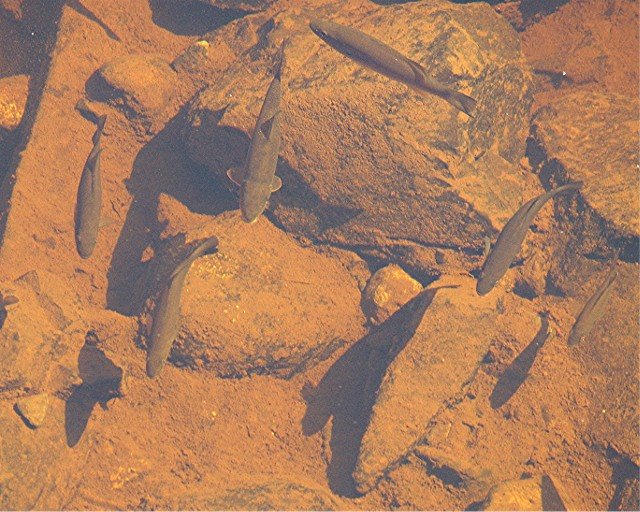
These Suckers are very visible in the river
when looking down from the bridge above.

Thursday, September 07, 2006

Double-crested Cormorant

I hadn't really seen much to note yesterday morning, except one little Spotted Sandpiper on a rock in the middle of the river, and had decided to return home for that second cup of tea. However, before doing that I decided to check out the pond area in the woods down by the river. Just as I was approaching the pond I could see a large bird in the river and at first thought it might be a duck.
Trying to be as quiet as possible, though I kept snagging my feet on the tall grasses beside the pond, I suddenly saw an Osprey splash into the river beyond and catch a fish. Forgetting about stealth I quickly captured the distant action in a burst of picture taking.

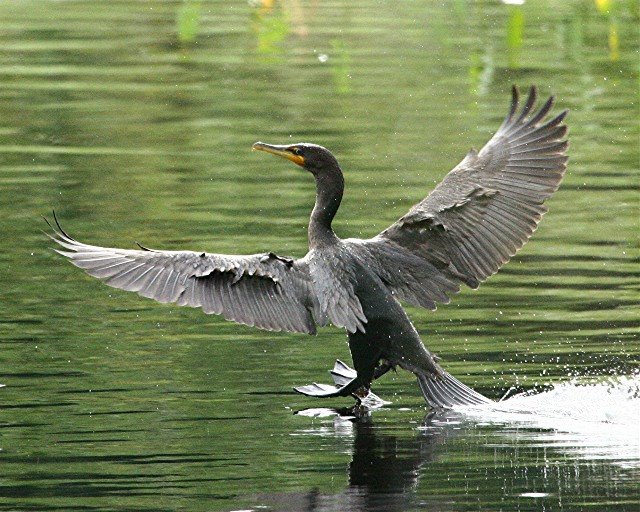
Thinking that the large bird I had seen in the river previously was probably gone, I approached quickly and was surprised to see that it was still there; a Double-crested Coromorant! I seldom see those birds here! When it saw me it took a short flight to create some distance between us and then landed again; creating a great photo opportunity for me. A 'nothing morning' of sightings had suddenly turned quite exciting.

Previously this summer I had photographed these Cormorants along the Saint John River.

Wednesday, September 06, 2006

Belted Kingfisher (Ceryle alcyon)

I seldom see a Belted Kingfisher and when I do it is usually after its departing call has announced its rapid disappearance down the river. Monday morning was a different scene and experience for me though. Standing on the observation deck above the river I noticed a Belted Kingfisher perched on a rock below. Then it quickly darted down the river; flying low over the water and occasionally skimming the top. Then it turned, and as if it were full of absolute joy and delight of just being alive on such a fine morning; it began darting and skimming over the water again, returning to its original perch on the rock.

Later the Kingfisher moved further up the river and perched on a rock near the shore allowing me to get a more closer view of its beauty. Then the battery in my camera ran out of power and I returned home , marvelling over such a beautiful display of nature that I had just seen.

Tuesday, September 05, 2006

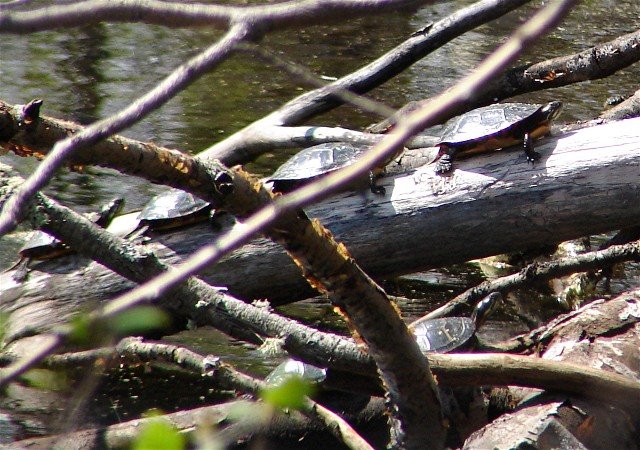
Painted Turtles (Chrysemys picta)


The yellow and red markings on this Painted
Turtle make it very distinctive and easily identifiable.
This photo was taken in early May, 2006

There are three Painted Turtles in the photo
above. Look carefully and you can see two
of their reflections at the bottom of the photo!

Painted Turtles can still be found at this time of year.
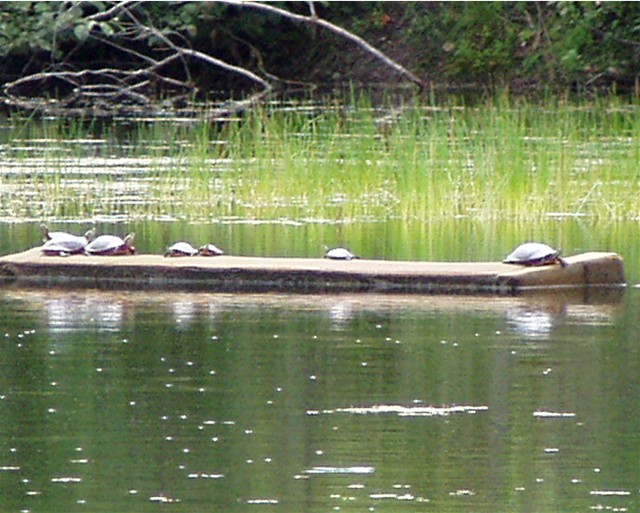
The above picture was taken last week, on August 30
(2006). There are five Painted Turtles in the photo;
three to the left and two to the right. An old sofa had been
discarded in a pond and is used by these turtles as a
sunning spot. In the photo below, taken in August, 2004,
seven Painted Turtles bask in the warmth of the sun.


Above six turtles enjoy the sun's warmth.
I am fortunate to have discovered three new
locations where I had found Painted Turtles
this year.

Above; one turtle had found a hummock in a
shallow area of a pond to use as a sunning place.
On this day, their gleaming, rounded shaped, backs
reminded me of upside down jelly molds scattered
among the vegetation.

Monday, September 04, 2006

Warblers


(seen above): This Northern Parula (Parula americana) ,
and below: a female Common Yellowthroat
(Geothlypis trichas), were recently at our feeder
area.

Sunday, September 03, 2006

Antlers on a Young White-tailed Deer


While driving along the highway yesterday we saw a White-tailed Deer crossing the road ahead of us. What was so noticeable about it was that it had large white areas on its body! There was a distant car approaching and two behind me, so I slower, giving the deer time to cross safely and also to slow the cars down behind me. I was not able to get my camera ready until the deer had crossed to safety and I had pulled my car over onto the shoulder of the road.

At first I was quite disappointed that I did not get a full body picture which showed the white areas on its body; but then slowly realized that maybe the prized photo after all was of the young growth of antlers that the young buck was carrying. In the profile view you can see the backward sweep of the antlers as they begin their growth. You can see some of the white colouring on the deer just below its neck.
I have only taken pictures of a buck with antlers three other times as I do not see male deer that often. Most Whitetail Deer pictures I have are of doe.

Saturday, September 02, 2006

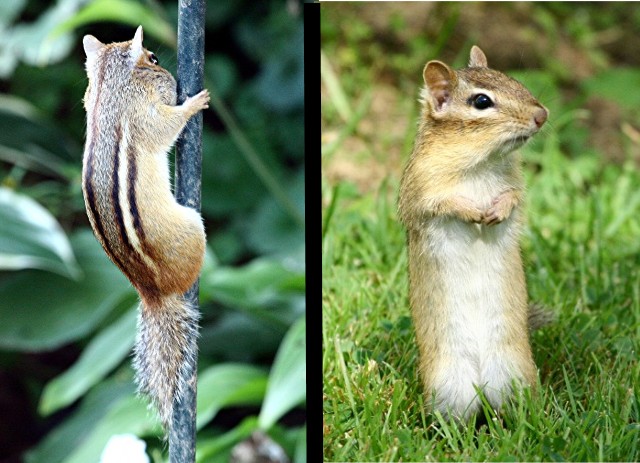
Chipmunk

Chipmunk (Tamias striatus)
This little creature is a member of the squirrel family and is easily recognized by the stripes on its back; it has 5 dark stripes and 2 light or white stripes. Chipmunks are frequently in our feeder area and yesterday we counted three. They have handy little cheek pouches which allows them to gather up large amounts of food to carry away.

Friday, September 01, 2006

Red-bellied Snake (Storeria occipitomaculata)

I had just started out for my morning walk when I spotted a Red-bellied Snake lying in the sun on an eroded hillside among the many rocks there. It was small, less than 12 in. long, and I was surprised that it did not startle and slide away as I approached. I remember seeing a small snake at the same location last year but I could not get a picture of it for it immediately disappeared as soon as I got near. The view was better on the downhill side so I walked around it to get a better look.

After returning home I located my copy of, The Amphibians and Reptiles of New Brunswick, by Stanley W. Gorham, (a 1970 publication of the New Brunswick Museum), to see if I could identify it. I learned that the Red-bellied Snake is the only snake in New Brunswick which has a reddish belly and it is not often longer than 12 inches. There was a light spot or two on the snake's head and that feature also is a characteristic of this species. The colour of the snake's back ranges from dark brown to light brown depending upon the phase it is in.

Monday, August 28, 2006

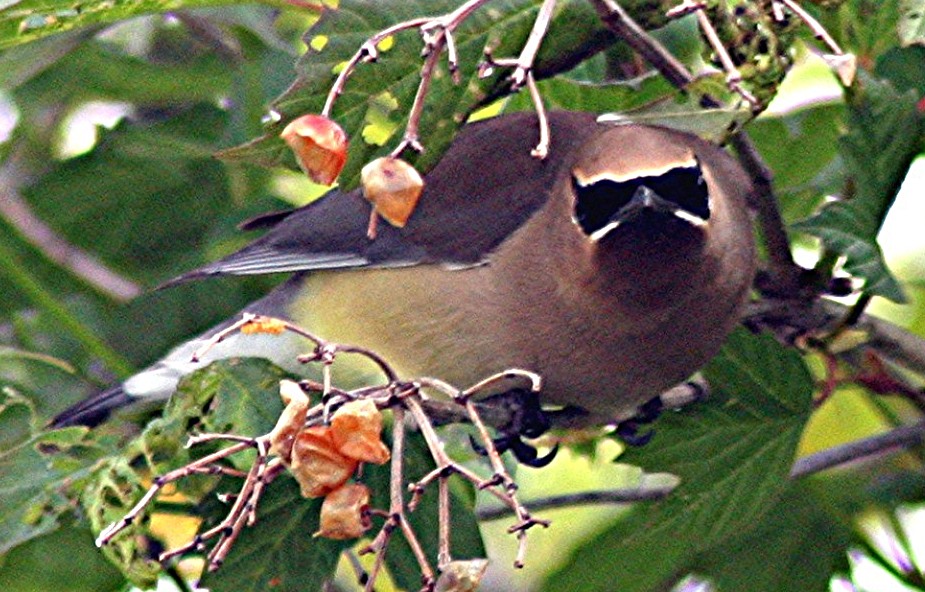
juvenile Cedar Waxwing (Bombycilla cedrorum)


One might assume that the sombre greys of this juvenile Cedar Waxwing could be that of a black and white photo mounted on a blue background, if it wasn't for the yellow that can be seen at the tips of its tail feathers. Several Cedar Waxwings were flying back and forth near the edge of a lagoon; assumedly they were catching insects. At first I only noticed the adult Waxwings and was surprised when reviewing my photos to see a grey, colourless looking juvenile included with the group. When seeing the 'grey waxwing' photo I decided to check carefully to see if I could find other juveniles when suddenly a Merlin appeared and all the Waxwings flew away.

Below is a colourful, adult Cedar Waxwing photographed in our feeder area in June of this year.
blog edited at 8 pm

Sunday, August 27, 2006

Chipping Sparrows (Spizzella passerina)


All of the many sparrows at our feeders this time of year confuse me! They are at so many different stages and ages that if I do not actually see an adult bird feeding a fledging I often cannot identify the bird. I have a tendency at first to think they are all Song Sparrows until I see a bit of yellow at their lores and then I am thinking Savannah or White-throated Sparrow. It there seems to be a lot of creamy coloured beige at their malars, then I am starting to think Lincoln Sparrow.

Looking at the photo to the upper right might give you an idea of what I mean. Without seeing the adult feeding this bird I would have been at a loss to identify it as a young
Chipping Sparrow.

Chipping Sparrows are probably the most resident of summer birds at our feeders, yet I had never really identified its young before until taking these pictures this week.

Below is a handsome adult Chipping Sparrow at our feeder area in May, '06.

Friday, August 25, 2006

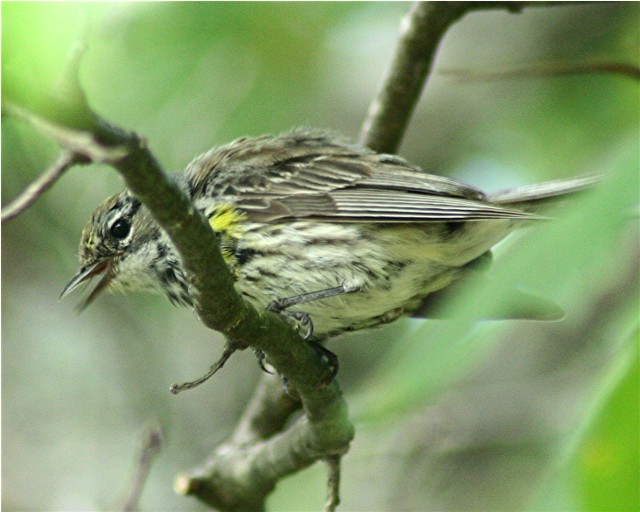
Yellow-rumped Warbler (Dendroica coronata)

I hadn't seen many warblers this spring with the exception of a Common Yellowthroat that nests nearby each year. However recently there have been a lot of warblers around the trees in our feeder area and our gardens and within the last few weeks we have noticed Redstarts, Yellow Warblers, Common Yellowthroats, and a Black and White Warbler.
I had only seen one Yellow-rumped Warbler this spring, in May, perched on a bridge by a stream several miles away.
Yesterday we saw an juvenile Yellow-rumped Warbler in a wooded area along our river. It was high in the tree tops busily flitting about eating insects. Other years we have often seen Yellow-rumps here but this one, seen yesterday, was the first sighting for us at this location this season.

The yellow area on the sides of the breast of the juvenile is not as prominent as that of the adult bird.

Monday, August 21, 2006

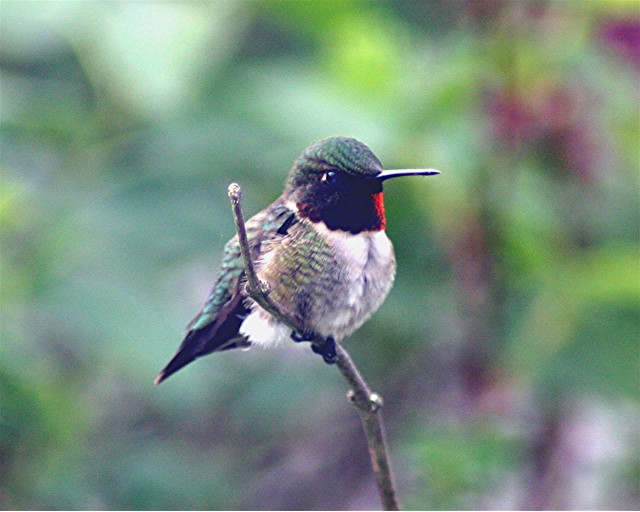
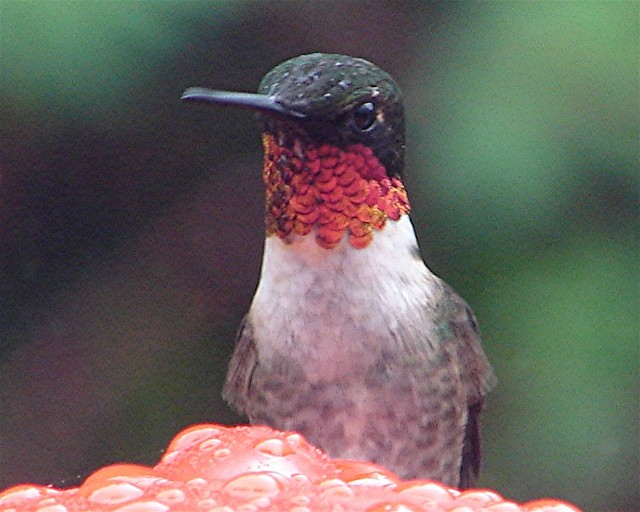
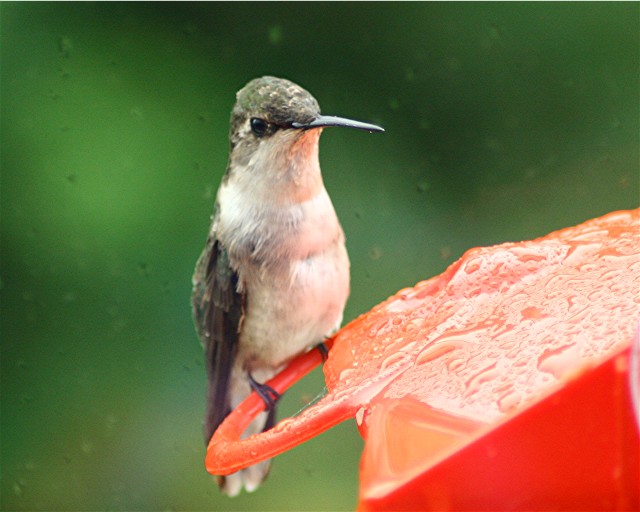
Ruby-throated Hummingbird (Archilochus colubris)


Arriving in mid to later May the Ruby-throated Hummingbird is always a welcome sight at our feeders.

The iridescent, red throat patch easily identifies the male and an up-close view illustrates the scale-like appearance of its feathers there.

The throat of the female Ruby-throated Hummingbird is white and also the female has white wing tips at her tail feathers.