Thursday, October 05, 2006

Morning Walk Observations


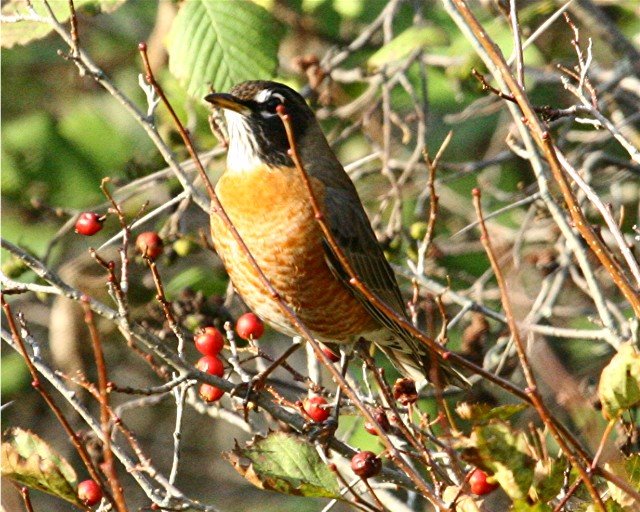
I try to go for a walk each morning and always take my camera with me. The beautiful colours of fall are in themselves enticing and yesterday mornings display was glorious. Each day holds its own surprises and visual awards and yesterday was no different. I had thought I would initially see several warblers, as I usually do, at a beginning location along a group of trees fronting on a meadow. Well surprise number one, no warblers there; but surprise number two was seeing a small flock of Robins. Seeing the Robins reminded me that I hadn't seen these birds much at all during the past weeks, or even months.
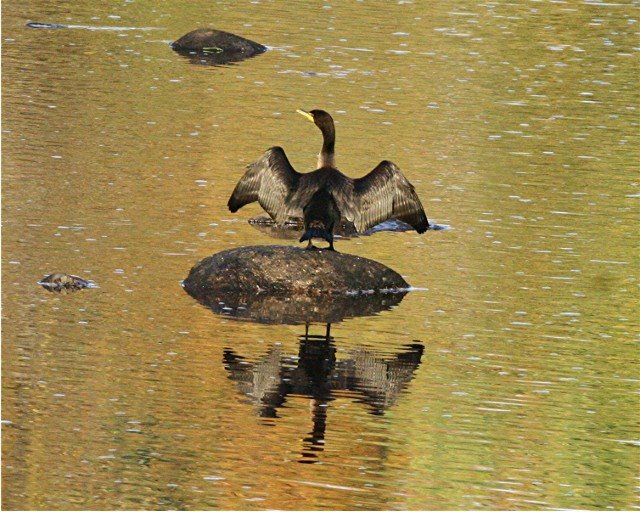
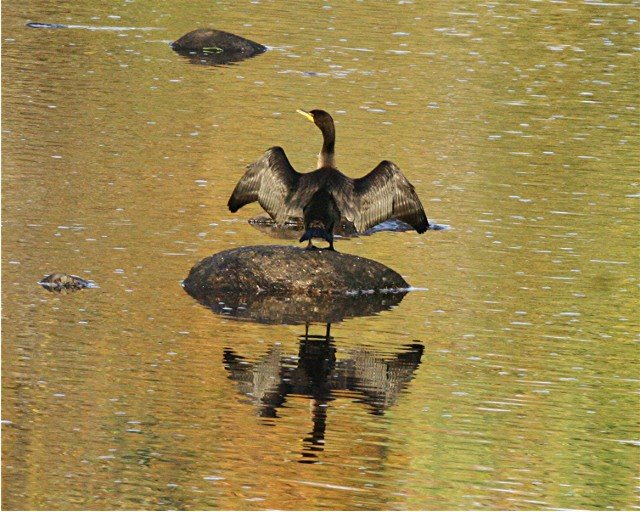
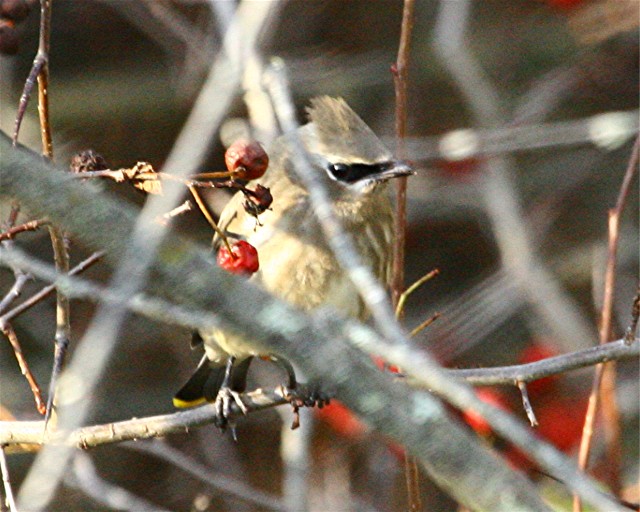
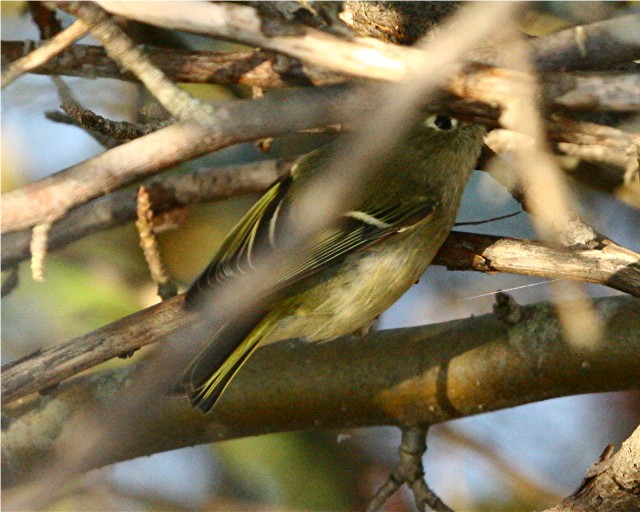
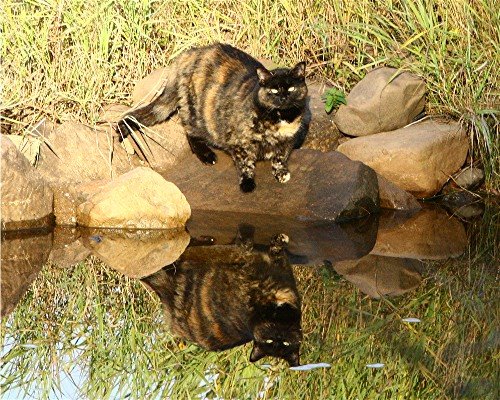
As I neared the river I saw a large shape on a rock in the distance and recognized a Double-crested Cormorant standing on a rock in the river drying its wings. Its reflection in the water attests to its stillness and the beauty of the day that surrounded me. While still watching the Cormorant I kept noticing movements in the trees. So that's where the warblers were! I also caught a glimpse of a Ruby-crowned Kinglet. There seemed to be several Kinglets in the area, or else this one moved around a lot, for I saw two more sightings later as I walked along the trail. While still observing the Cormorant I spied a neighbour cat out on its morning hunt observing me while stopping by a small pool of water. Further on, later during my walk I saw a small group of Cedar Waxwings feeding and also saw a Hairy and a Pileated Woodpecker; Song Sparrows, Mourning Doves and Yellow-
Rumped and Common Yellowthroat Warblers.
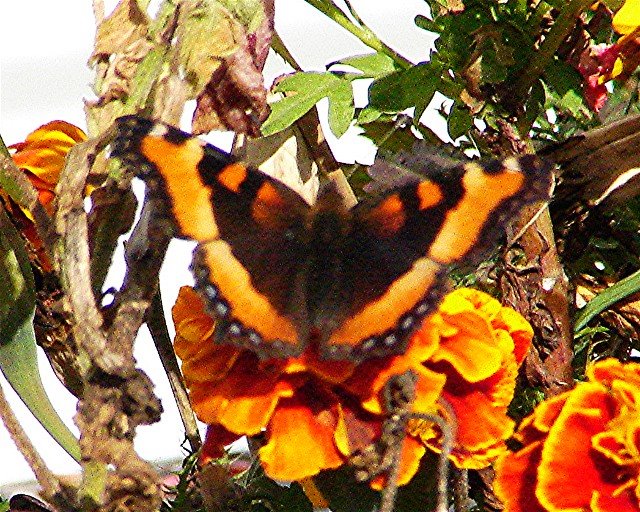
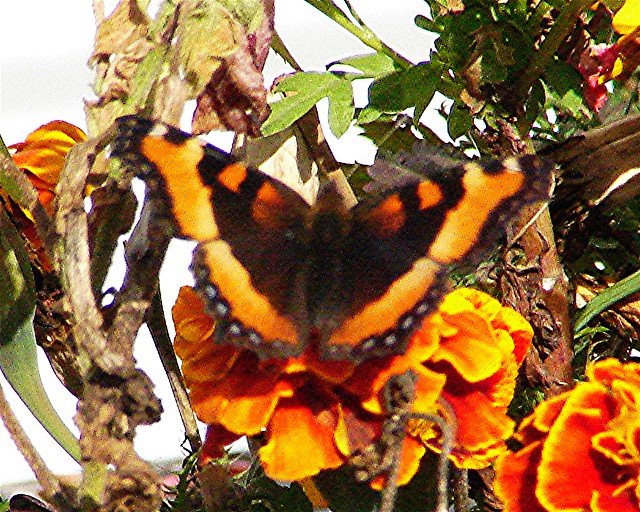
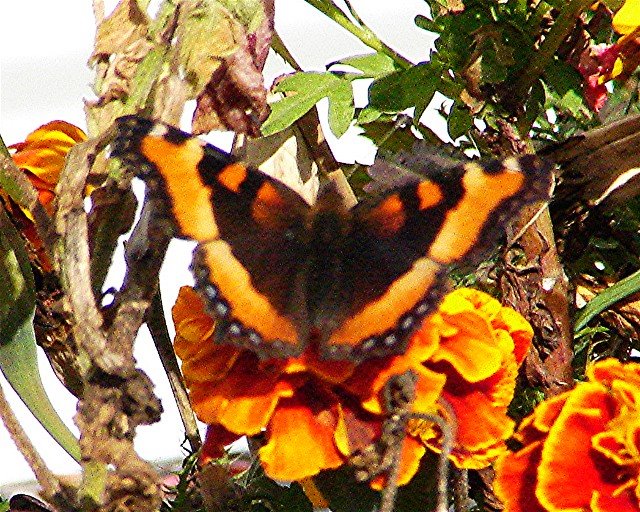
Perhaps one of the most beautiful sightings of the day was an unexpected glimpse of a Milbert's Tortise shell Butterfly.

Wednesday, October 04, 2006

the Kingfisher (Ceryle alcyon)


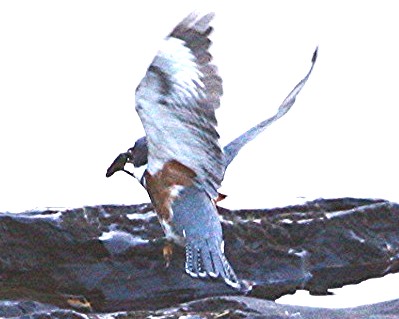
Sometimes I am just plain lucky by being in the 'right place at the right time' like I was yesterday. I had stopped on the bridge above the river and had noticed a Spotted Sandpiper fly under it and land on some rocks on the other side. I crossed to the other side too and tried to get a few good shots but the bird was quite a distance away and even with my lens at its furthest extension I still could not get a good picture.

I was going to turn away when suddenly I saw a Belted Kingfisher dart out from some where. It perched on a rock and started throwing something in the air and then caught it and repeatedly seemed to bang it against the rock a few times. It was only after I got back home and down loaded my pictures that I could see that it was a frog that it had caught.
I have made a previous posting on the Belted Kingfisher on September 6, '06. It can be found in the archives section under 2006-09-03

Tuesday, October 03, 2006

female Common Yellowthroat


This female Commom Yellowthroat was seen
flitting about in our feeder area this morning.

Photos of a male Common Yellowthroat can
be viewed at Common Yellowthroat

Monday, October 02, 2006

Ruby-crowned Kinglet (Regulus calendula)


The first time I had seen a Ruby-crowned Kinglet was in December, 2000. At that time, and also when I sighted this bird again yesterday in our feeder area, I at first thought I was looking at an adult nonbreeding female Goldfinch as it was rather drab looking and had whitish wingbars. The immediate visual difference however was its very noticable eye ring and it was tiny, with a stocky looking appearance, smaller than a Goldfinch.

The adult male Ruby-crowned Kinglet has a small red crest on the top of its head that can sometimes be seen.

Sunday, October 01, 2006

Young Thrush


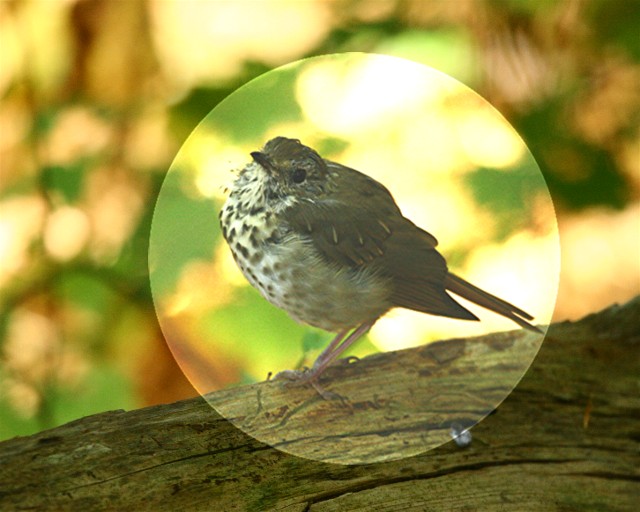
I was walking downhill on a walking trail in the middle of a wooded section last week when I saw this young Thrush sitting on a log. I immediately stopped in my tracks when I saw it and the bird stayed exactly where it was too; as if frozen. It had the manner of an immature bird and did not seem to know how to react to my sudden appearance. I took several pictures of it but as can be seen from the photos the results were not too distinct. I did some photo editing so that it could be seen a bit clearer but it is still not that adequate to make an accurate id. I do not know for sure what the species is but I might make a guess that it is possibly a young Hermit Thrush. This bird has a reddish tail, which is one of their characteristics, and I have seen Hermit Thrush in this area before.

As I moved, attempting to get a better view, the Thrush hopped off the log and disappeared into the underbrush.

Saturday, September 30, 2006

Moose


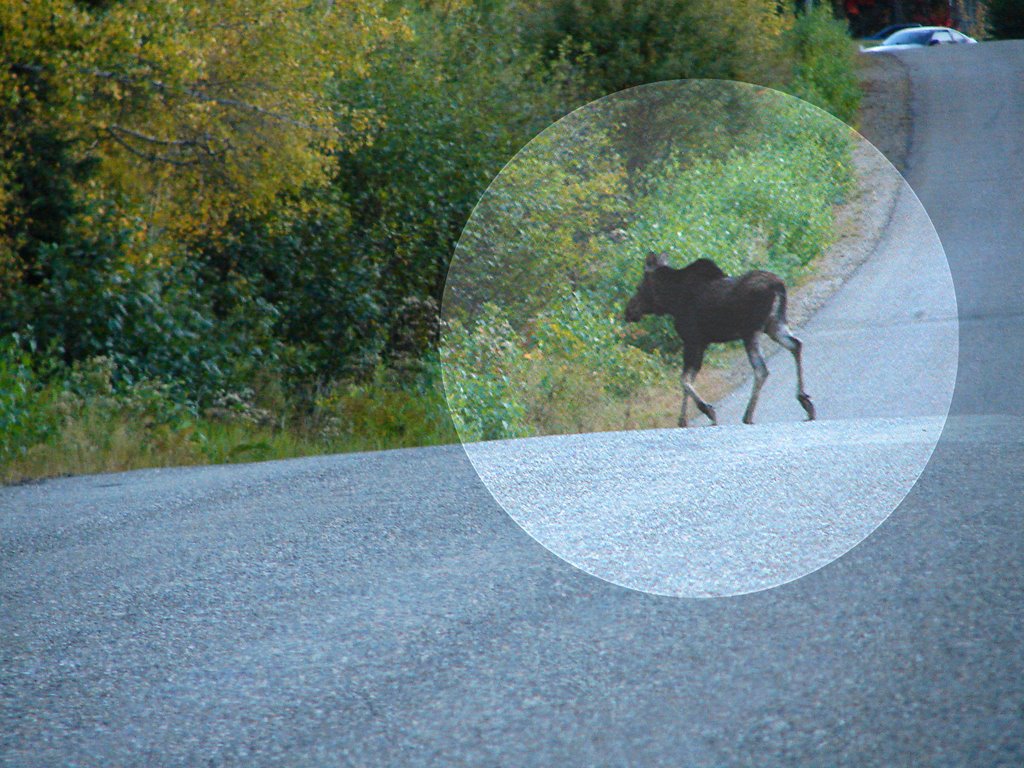
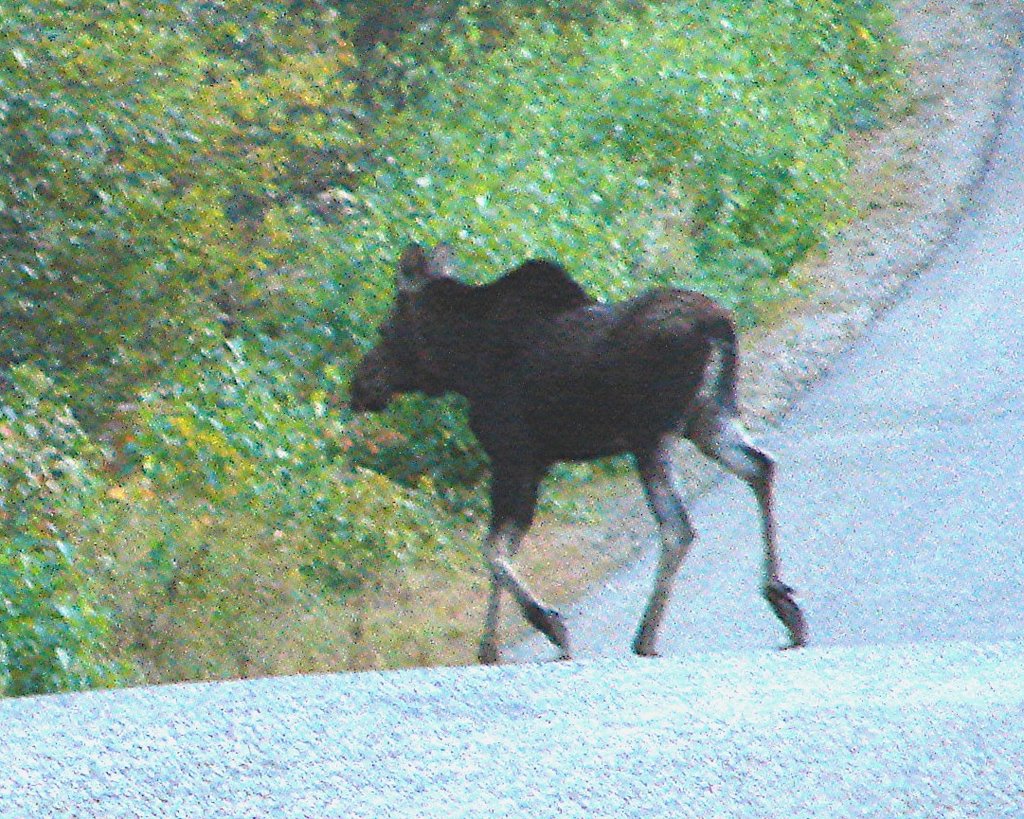
Being out for a drive this evening taking photos of the beautiful autumn leaves; I did not have my telephoto lens handy when I saw this Moose ahead of me on the road. So, I held my small fixed lens camera out my open car window and managed to get this one photo before it left the road and entered the woods.

1st winter Yellow-rumped Warbler


A feature which makes the Yellow-rumped Warbler easily identifiable is the yellow spot on its rump. Today this little 1st winter Yellow-rumped Warbler flitted about in the shadowy parts of our feeder area but its yellow rump immediately disguinished it from the other small birds there.
I had done a posting on the juvenile stage of the Yellow-rumped Warbler on August 25th; this can be found in the Archives section of this blog at 2006-08-20

Friday, September 29, 2006

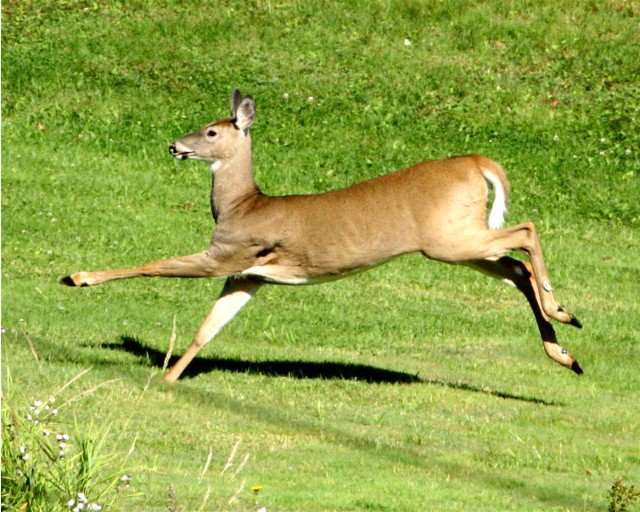
Fleet-footed Motion


Thursday, September 28, 2006

American Woodcock (Scolopax minor)

Although the leaves on the ground might suggest the fall, these pictures of an American Woodcock were actually taken on March 31, 2006. A Woodcock is probably one of the most un- expected birds that I thought I would be able to take a close up photo of, for of the ones I had seen before were usually viewed from the tail end of a quickly departing bird. However it was a late afternoon in March '06, when looking out onto our bird feeder area I saw this bird steadily feeding right below our window! I had the opportunity to take many, many pictures and when I turned from the window, it was still feeding.

Wednesday, September 27, 2006

Merlin (Falco columbarius)


Although some refer to the Merlin as a Pigeon Hawk, this is a misnomer as it is not a hawk at all but a falcon! This was a wonderful and unexpected sighting today as it is seldom that I get a chance to see and take a picture of a Merlin that is stationary.

Tuesday, September 26, 2006

Pine Warbler (Dendroica pinus)


With its white wing bars and yellow eye ring there was no mistaking this male Pine Warbler. This was the first glimpse I have had of this species this year. Found along a walking trail in an olde stand of Pines, this friendly little warbler allowed me some very close up views for picture taking yesterday.

Monday, September 25, 2006

Osprey in Flight


I have been waiting all summer to get some good close up views of an Osprey and yesterday I had my chance. I was sitting in my car beside the river watching a group of Common Mergansers upstream having a fine time swimming, diving and splashing in the water; and I was hoping that they would swim downstream a little closer to me.
I was taking a few photos of a Spotted Sandpiper closeby when I heard the whistling sound of an Osprey and I watched it land at the top of a tree across the river from me. Then the waiting game began. If I could sit quietly and have the patience to wait I would finally get my chance for that long awaited picture opportunity.

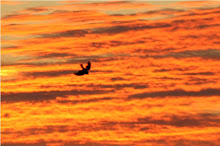
When the moment came its flight was strong and graceful as it swooped from the tree top, then the Osprey made a turn and flew up river out of sight.

Friday, September 22, 2006

juvenile Eastern Phoebe


When I saw this bird perched on old telegraph wires this morning I first thought I had taken a picture of a Flycatcher; this was mainly because of the yellow belly. The yellow belly is very evident in the cropped closeup to the upper right. However other features did not seem to fit and I kept hestitating to id it as a Flycatcher.

The bird in the photo had a dark, flat, rounded head and its bill was black; and these are characteristic features of an Eastern Phoebe. Upon checking with The Sibley Guide to Birds I noticed that he had included a picture of a juvenile Eastern Phoebe which has a yellow belly from June to November! Although I often see Eastern Phoebes at this same location in the spring it is probably adult Phoebes that I am used to seeing and I had not connected a yellow belly with an Eastern Phoebe before. Other characteristics of Eastern Phoebes are the weak wing bars and smudges on the sides of the breast; both features can be seen in the photo to the upper left. So I have concluded that the bird in the photos I took this morning is probably a juvenile Eastern Phoebe.

Thursday, September 21, 2006

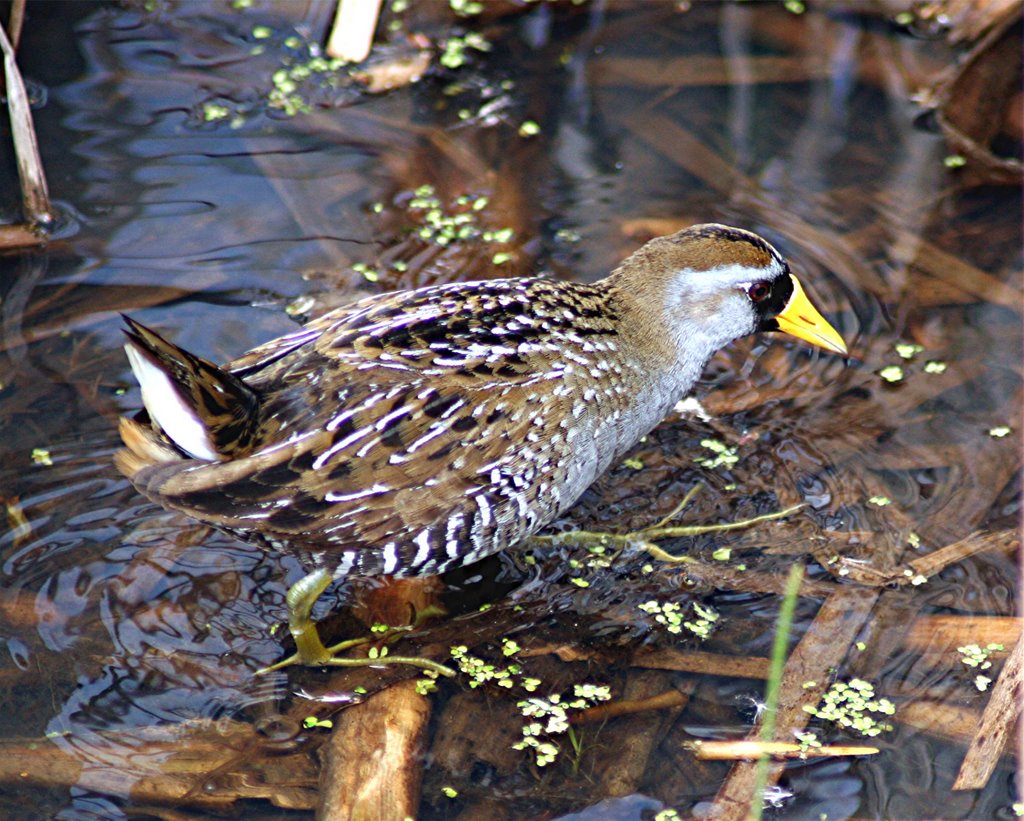
Sora (Porzana carolina)

This was the first and only time, I had seen a Sora and when taking the picture I didn't know what it was. I only knew that it was a fascinating find and was definitely a new species to add to my life list. Only after returning home and downloading the picture was I able to identify what I had seen.

I had been walking along the boardwalk at the Sackville Waterfowl Park in May when I photographed this bird.

Tuesday, September 19, 2006

Common Yellowthroat (Geothlypis trichas)

I had noticed a few Song Sparrows and White-throated Sparrows moving among the leaves and branches of a nearby corner of bushes and I decided to check it out further. I made a few pishing sounds ("pish, pish, pish") and much to my surprise a curious male Common Yellowthroat poked his head out of the bushes right in front of me.
This male warbler is easily identified because of the black mask he wears. The photo to the left is of a male Common Yellowthroat that I had taken near the same location in May (2006). I often find these warblers in this same spot each season although this has only been my second sighting of the male this year.
Photos of a female Common Yellowthroat can be viewed at: female Common Yellowthroat

Monday, September 18, 2006

Moth Identification

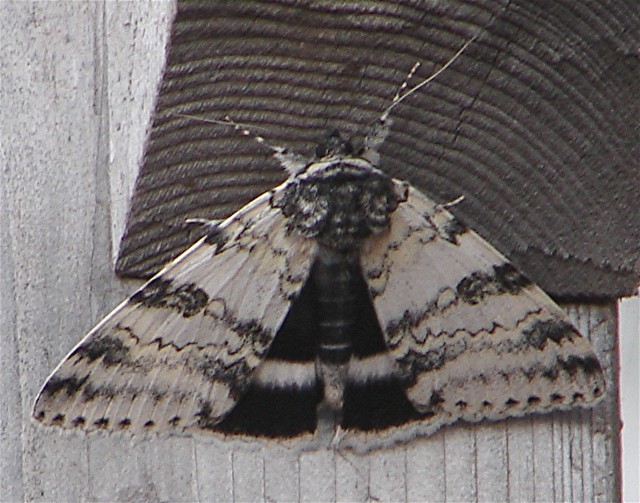
White Underwing (Catocala relicta)
While sitting in the entertainment area at the Queen's County Fair on Saturday I saw a fairly large moth land onto one of the posts in front of me. And with such a wonderful picture taking opportunity presented to me, I of course took its picture.

Sometimes moth ID is not easy but if the moth opens its forewings, thus showing its underwings, it is often makes the id much easier. This was the case with this moth. The White Underwing is the only moth we would see that has black and white bands on its hindwing and when this moth landed it intitally had its underwings showing. The White Underwing moth has a wingspan of 7 to 8 centimeters. (reference source: A Field Guide to Moths of Eastern North America, by Charles V. Covell, Jr. 2005)

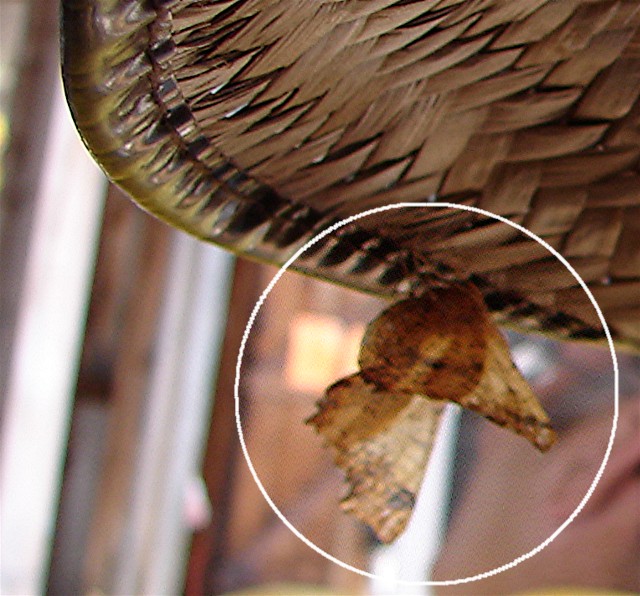
Surprising moth sightings continued to be a theme for next I saw a Maple Spanworm Moth (Ennomos magnaria) clinging to the brim of my spouse's hat! That was pretty funny. This moth, with its unevenly, scalloped wings and orange-yellowish colour was clingling onto the hat and at first looked like a small leaf. This also is a fairly large moth with a wingspan of from 4 to 6 centimeters.